

Do you have a work to sell?
Laliberté, Alfred
1877–1953
Sculpture
An undisputed master of form, Alfred Laliberté developed an aesthetic oscillating between academic realism and symbolism. His style is distinguished by an exceptional ability to breathe movement and emotion into matter, whether in his monumental bronzes or his more intimate terracotta pieces. Influenced by Rodin during his studies in Paris, he combined rigorous technique with poetic sensitivity, creating faces of great psychological depth and compositions where the human body becomes the vessel for historical or allegorical narratives.
His artistic philosophy centered on the preservation of national identity. For Laliberté, sculpture was a duty of memory: he devoted a large part of his career to immortalizing the heroes, traditional trades, and legends of French Canada. His philosophy rested on the idea that art must be rooted in the soil to reach the universal. By creating his famous series Métiers d’autrefois (Trades of Yesteryear), he acted as an ethno-historian, capturing the nobility of peasant gestures and the poetry of folk tales, making his work a fundamental pillar of Quebec’s cultural consciousness.
Best results for Laliberté, Alfred
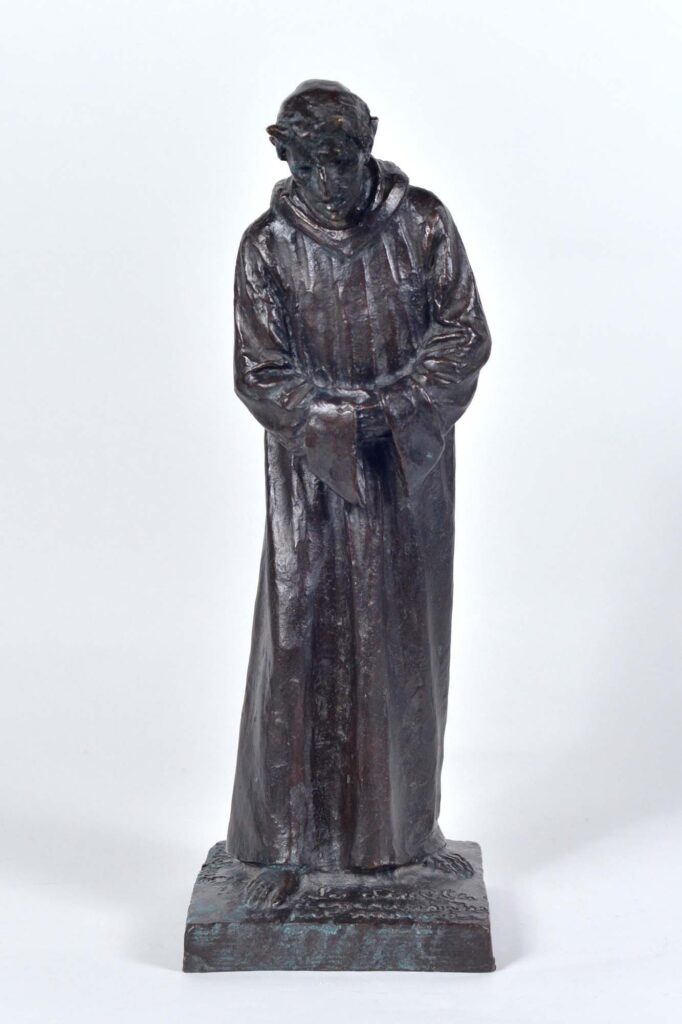
“Le diable devenu vieux se fait moine”
Bronze sculpture, signed lower left A. Laliberté, F.C.A foundry Auction result: 5 500 $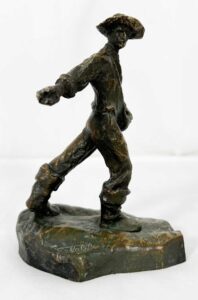
The sower
Bronze with brown patina sculpture, signed on the base A Laliberté Auction result: 3 600 $
“Le cultivateur”
Bronze sculpture, 7/8, signed on the back A. Laliberté, Roman Bronze Work N.Y. Auction result: 3 400 $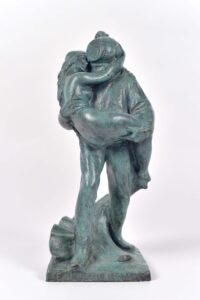
“Le pêcheur de perles”
Bronze sculpture, signed on the back A. Laliberté, Andro Founder Paris F.C.A. Auction result: 3 200 $Rejoindre notre infolettre!
Join our newsletter
“Art and love are the same thing: It’s the process of seeing yourself in things that are not you.”
– Chuck Klosterman
Heures d'ouvertures
Lundi au Vendredi
10H00 – 17H00
Samedi et Dimanche
Fermé
Clients
Liens utiles
“Art and love are the same thing: It’s the process of seeing yourself in things that are not you.”
– Chuck Klosterman
Opening hours
Monday to Friday
10:00am – 5:00pm
Saturday and Sunday
Closed