

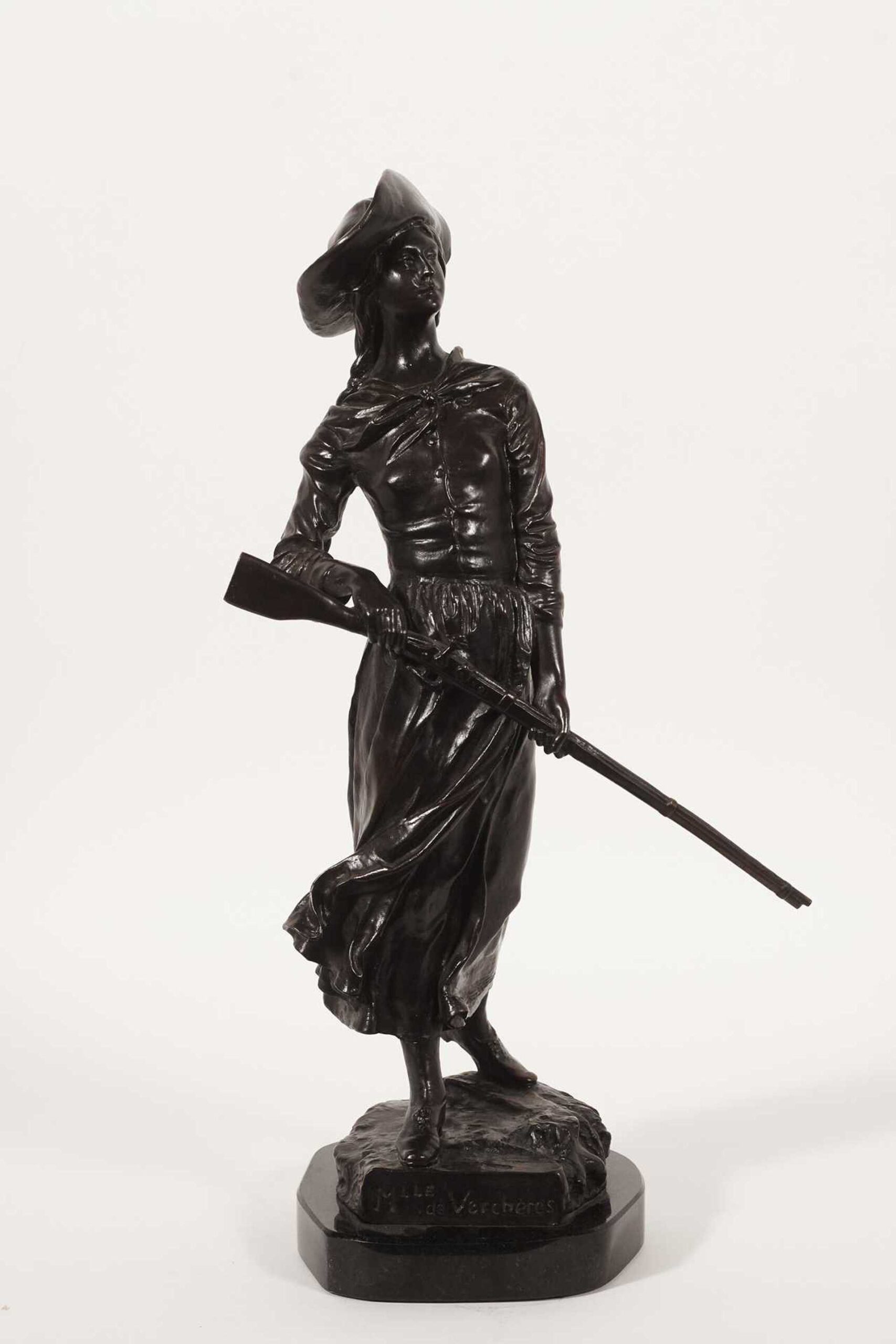
Hébert, Louis-Philippe (1850–1917)
Sculpture, Statuaire commémorative
“Mlle de Verchères”
About Hébert, Louis-Philippe
The undisputed master of commemorative statuary, Louis-Philippe Hébert developed an aesthetic of romantic and academic realism. His style is distinguished by rigorous anatomical precision combined with a dramatic sense of movement. His figures, whether in bronze or terracotta, possess a heroic presence and an emotional intensity that commands attention. He excelled at rendering textures—the fluidity of garments, the coarseness of furs, or the nobility of a face—creating works that blend fine detail with structural monumentality.
His artistic philosophy centered on a historical and patriotic mission. For Hébert, sculpture was the ultimate tool for telling a people’s history and honoring its great figures. At a time when Canada was seeking to assert its identity, he acted as a true “visual historian.” His philosophy rested on the idea that art should serve as a civic model and cultural anchor. Traveling between Montreal and Paris to cast his bronzes, he imported the highest standards of European technique to Quebec, raising Canadian sculpture to the rank of a major and respected discipline on the international stage.
Other works by Hébert, Louis-Philippe
Rejoindre notre infolettre!
Join our newsletter
“Art and love are the same thing: It’s the process of seeing yourself in things that are not you.”
– Chuck Klosterman
Heures d'ouvertures
Lundi au Vendredi
10H00 – 17H00
Samedi et Dimanche
Fermé
Clients
Liens utiles
“Art and love are the same thing: It’s the process of seeing yourself in things that are not you.”
– Chuck Klosterman
Opening hours
Monday to Friday
10:00am – 5:00pm
Saturday and Sunday
Closed