

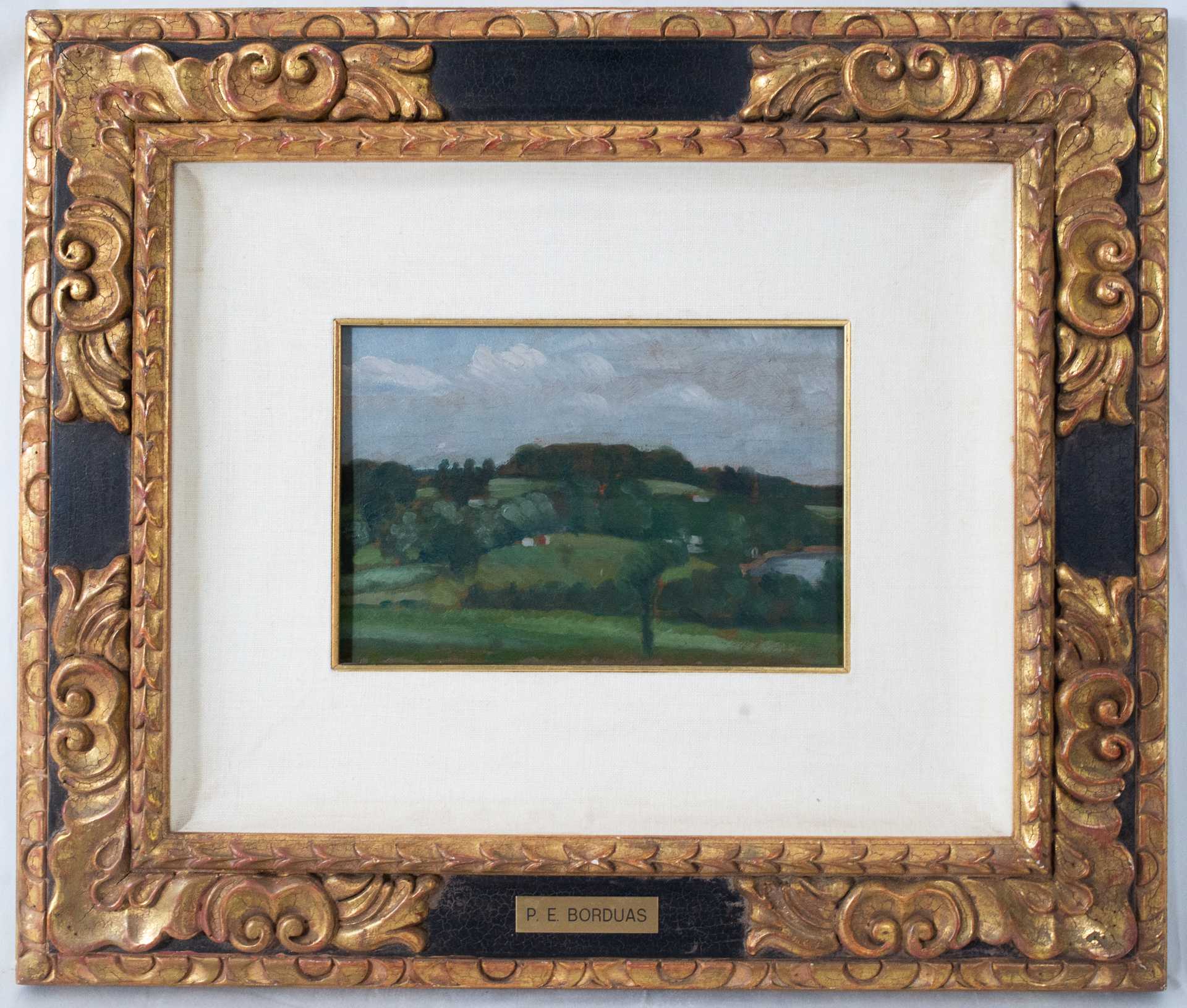
About Borduas, Paul-Émile
A painter and theorist born in Saint-Hilaire, Paul-Émile Borduas is one of the most radical and transformative figures in Quebec history. As the principal author of the Refus global manifesto (1948), he sparked a cultural revolution that laid the groundwork for the Quiet Revolution by freeing art from religious and academic control.
Borduas’s philosophy is rooted in the concept of psychic automatism, inspired by French Surrealism. For him, the act of painting must be spontaneous, free from prejudice and the control of reason. His aesthetic is a quest for absolute freedom in which the artist allows his unconscious to speak in order to create new forms. He firmly believed that the transformation of art was the first step toward the transformation of society.
His early abstract works feature objects floating in a dreamlike space, painted with lively brushstrokes and an often rich palette. He revolutionized depth in painting, using the background not as a backdrop but as an active material. Toward the end of his life in Paris, his style became dramatically simplified. His canvases became large expanses of white sculpted by massive black patches, creating a contrast of metaphysical power.
He trained and influenced an entire generation of major artists, including Jean Paul Riopelle and Marcel Barbeau. Today, he is regarded as a national hero. The highest award given by the Government of Quebec in the visual arts bears his name: the Paul-Émile-Borduas Award.
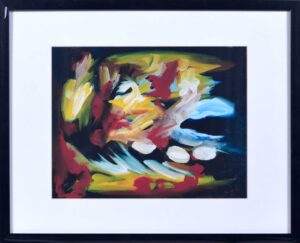
Other works by Borduas, Paul-Émile
Rejoindre notre infolettre!
Join our newsletter
“Art and love are the same thing: It’s the process of seeing yourself in things that are not you.”
– Chuck Klosterman
Heures d'ouvertures
Lundi au Vendredi
10H00 – 17H00
Samedi et Dimanche
Fermé
Clients
Liens utiles
“Art and love are the same thing: It’s the process of seeing yourself in things that are not you.”
– Chuck Klosterman
Opening hours
Monday to Friday
10:00am – 5:00pm
Saturday and Sunday
Closed