

Do you have a work to sell?
Bonet, Jordi
1932–1979
Muraliste, Sculpteur
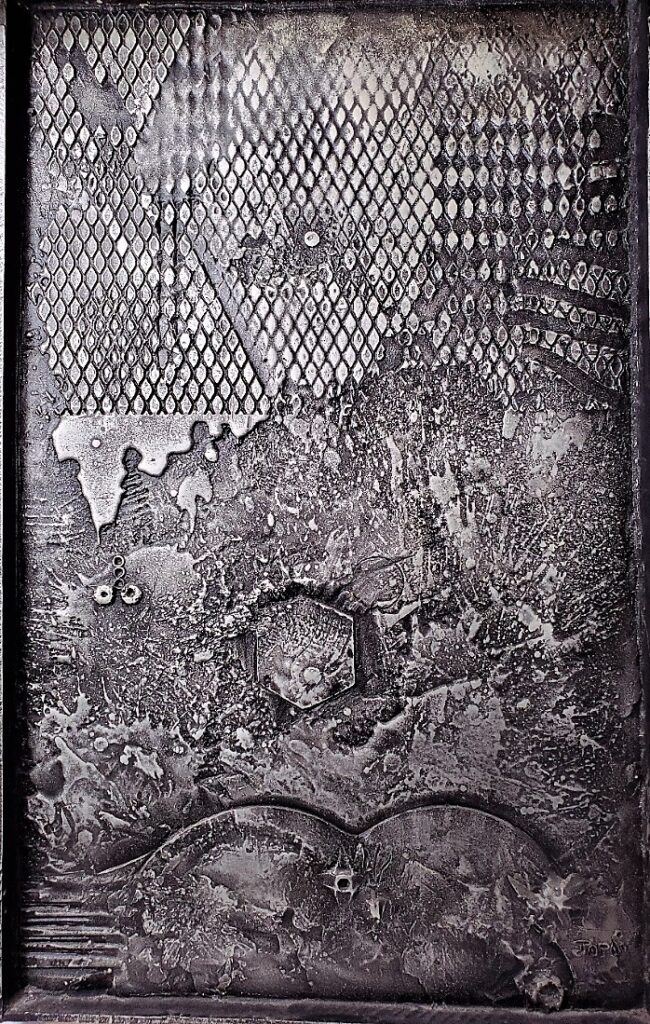
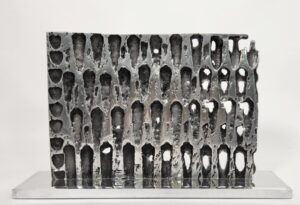
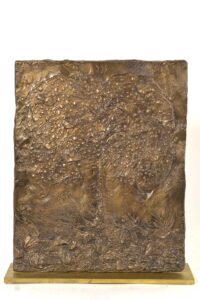
An artist of rare intensity, Jordi Bonet developed an aesthetic of symbolic and organic expressionism. His style is distinguished by the use of earthy and robust materials—ceramic, concrete, aluminum, and bronze—which he sculpted with a tormented and vibrant gesture. His monumental murals, such as the one at the Grand Théâtre de Québec, are famous for their dense textures and bas-reliefs where human figures, cosmic symbols, and elements of nature intertwine. He possessed a unique gift for transforming industrial or raw materials into visual poetry imbued with great dramatic power.
His artistic philosophy centered on the human condition and spirituality. For Bonet, art was a cry, an exploration of the dualities between life and death, pain and hope. Deeply marked by the loss of an arm in childhood and by his Catalan roots, he sought to express the universal through the particular. His philosophy rested on the idea that a work of art must inhabit public space to uplift the collective soul. He saw no boundary between architecture and sculpture, firmly believing that art should be an integral part of people’s daily lives to confront them with their own humanity.
Rejoindre notre infolettre!
Join our newsletter
“Art and love are the same thing: It’s the process of seeing yourself in things that are not you.”
– Chuck Klosterman
Heures d'ouvertures
Lundi au Vendredi
10H00 – 17H00
Samedi et Dimanche
Fermé
Clients
Liens utiles
“Art and love are the same thing: It’s the process of seeing yourself in things that are not you.”
– Chuck Klosterman
Opening hours
Monday to Friday
10:00am – 5:00pm
Saturday and Sunday
Closed