

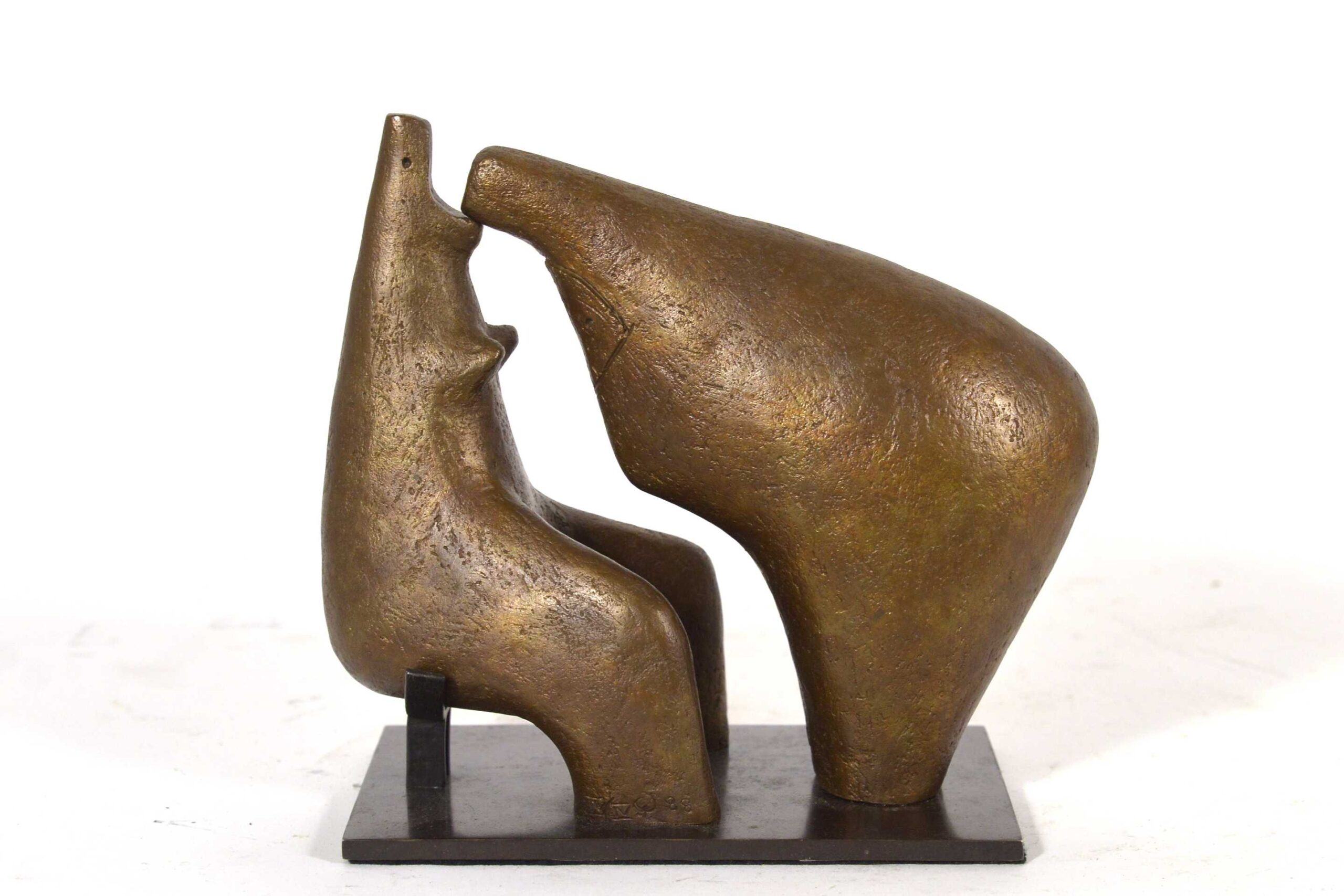
About Daudelin, Charles
A polymorphic and visionary artist, Charles Daudelin developed an aesthetic of organic and geometric abstraction. His style is characterized by a rigorous exploration of materials—bronze, aluminum, steel, and wood—which he bent to his will to create interplays of balance and void. He was a master of articulated forms and structures that seem to defy gravity. His monumental works are not mere objects placed within a city; they are dialogues with the surrounding architecture, often using water (as in his famous fountain-sculptures) to add a sonic and moving dimension to the rigidity of metal.
His artistic philosophy centered on the accessibility of art within the city. For Daudelin, art was not meant to be confined to museums but should “take to the streets” to inhabit the daily lives of citizens. He viewed the sculptor as a builder of space capable of transforming the urban experience. His philosophy rested on the idea that form must possess its own internal rhythm, inspired by the forces of nature. A signatory of the Prisme d’Yeux manifesto (alongside Pellan), he championed total creative freedom throughout his life, establishing himself as one of the greatest architects of Quebec’s cultural modernity.
Other works by Daudelin, Charles
Rejoindre notre infolettre!
Join our newsletter
“Art and love are the same thing: It’s the process of seeing yourself in things that are not you.”
– Chuck Klosterman
Heures d'ouvertures
Lundi au Vendredi
10H00 – 17H00
Samedi et Dimanche
Fermé
Clients
Liens utiles
“Art and love are the same thing: It’s the process of seeing yourself in things that are not you.”
– Chuck Klosterman
Opening hours
Monday to Friday
10:00am – 5:00pm
Saturday and Sunday
Closed