

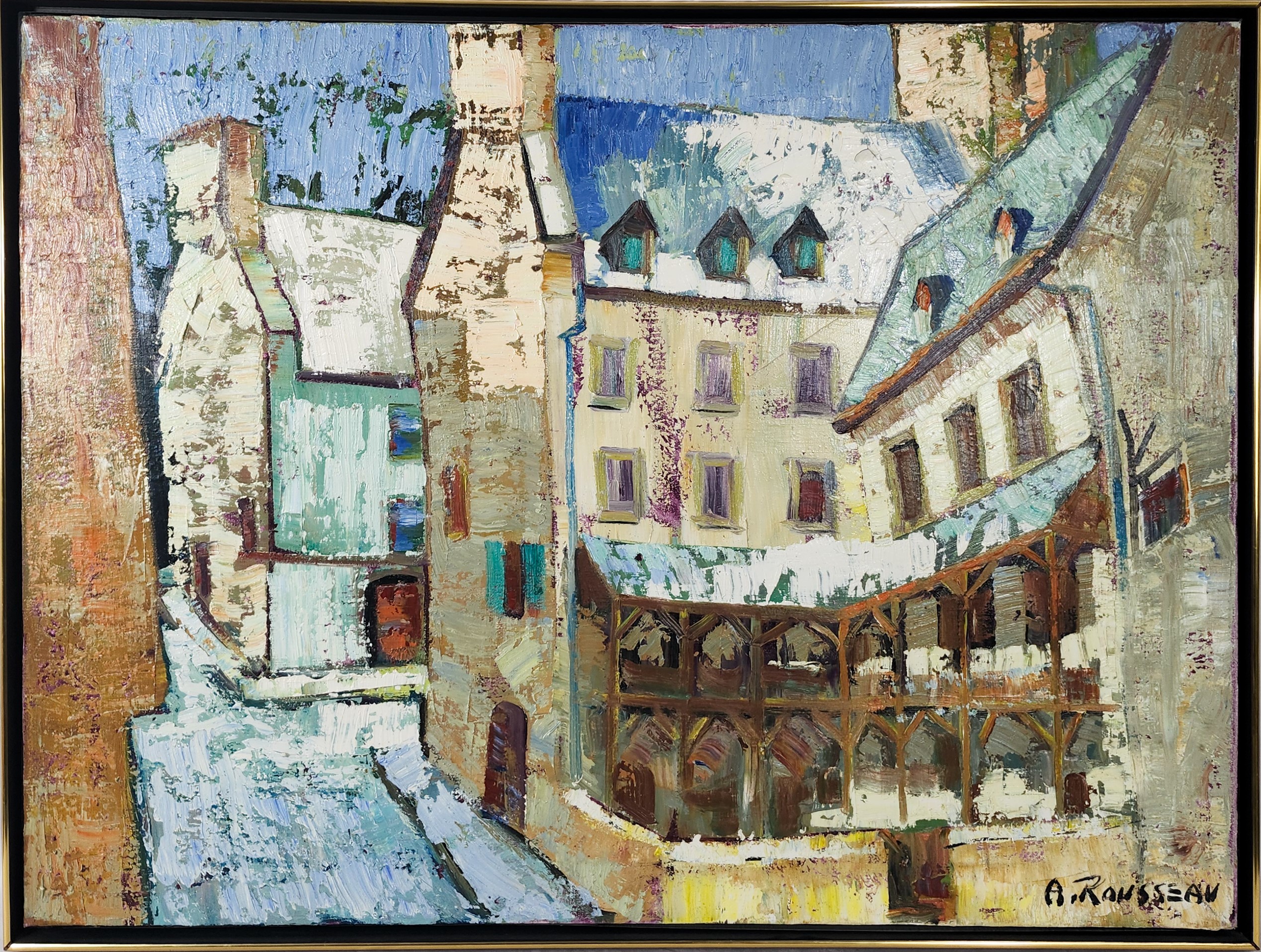
Rousseau, Albert (1908-1982)
Quebec painter, Technique mixte
Place royale, Québec
About Rousseau, Albert
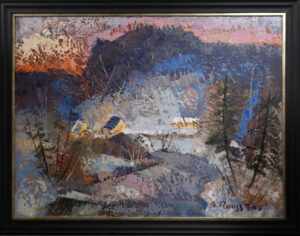
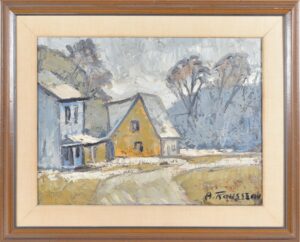
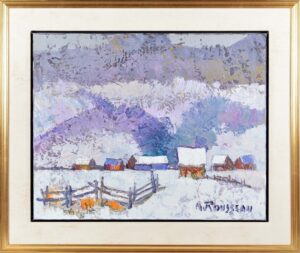
An artist of insatiable curiosity, Albert Rousseau developed an aesthetic of textured expressionism. His style is distinguished by a constant exploration of materials; he often mixed oil with heterogeneous substances like sawdust or sand to give his landscapes and scenes of old mills a tactile thickness. His works oscillate between solid figuration and lyrical abstraction, driven by a rich color palette and a light that seems to emanate from the very substance of the paint itself.
His artistic philosophy centered on technical freedom and sharing. For Rousseau, art was never meant to stagnate in a set formula. He viewed creation as a living laboratory where accident and intuition play a primary role. His philosophy rested on accessibility and the transmission of knowledge, a vision he realized by founding the “Moulin des Arts” in Saint-Étienne-de-Lauzon. He firmly believed that art is a social engine, establishing him not only as an accomplished painter but as a generous mentor who broke down the artistic boundaries of his time.
Rejoindre notre infolettre!
Join our newsletter
“Art and love are the same thing: It’s the process of seeing yourself in things that are not you.”
– Chuck Klosterman
Heures d'ouvertures
Lundi au Vendredi
10H00 – 17H00
Samedi et Dimanche
Fermé
Clients
Liens utiles
“Art and love are the same thing: It’s the process of seeing yourself in things that are not you.”
– Chuck Klosterman
Opening hours
Monday to Friday
10:00am – 5:00pm
Saturday and Sunday
Closed